Case 02 / B2B · Marketing Site
Campbell Logistics
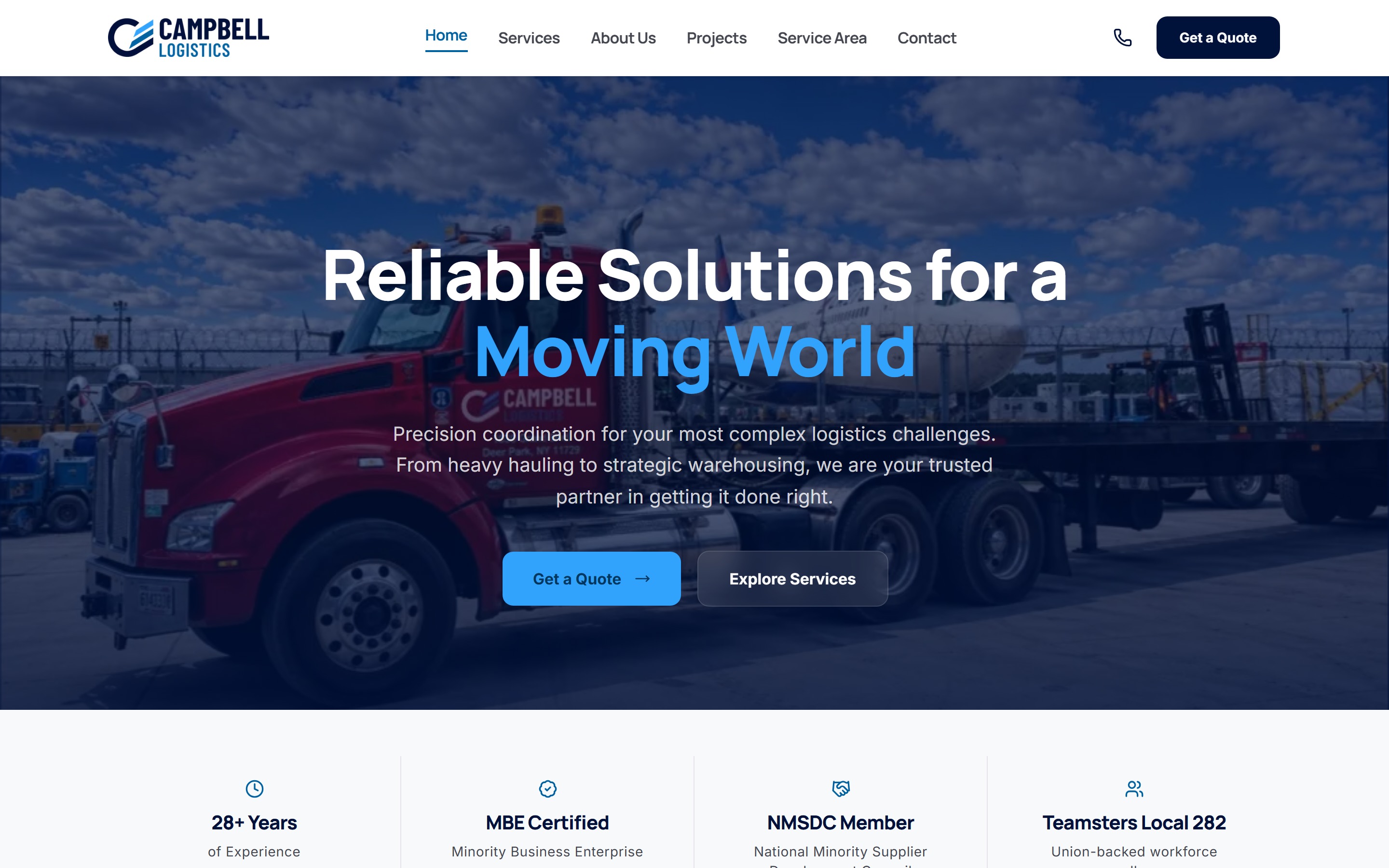
A freight firm launched by a 28-year industry veteran. Built for procurement teams who know exactly what they're evaluating.
·01 / Challenge
Challenge.
When an industry veteran with nearly three decades in freight decides to go independent, the business is real before the website exists. The challenge wasn't explaining the industry. It was proving that Campbell Logistics could handle freight at the scale its clients needed, without the brand collateral that larger firms had spent years building.
The procurement teams evaluating freight partners don't respond to marketing language. They want to know service areas, asset availability, and how disputes get handled. The site needed to speak that language fluently, or it wouldn't get past the first screen.
·02 / Approach
Approach.
The design started with the audience: logistics coordinators and supply chain managers who vet vendors with a checklist, not a feeling. Every section of the site was built around answering their questions before they had to ask.
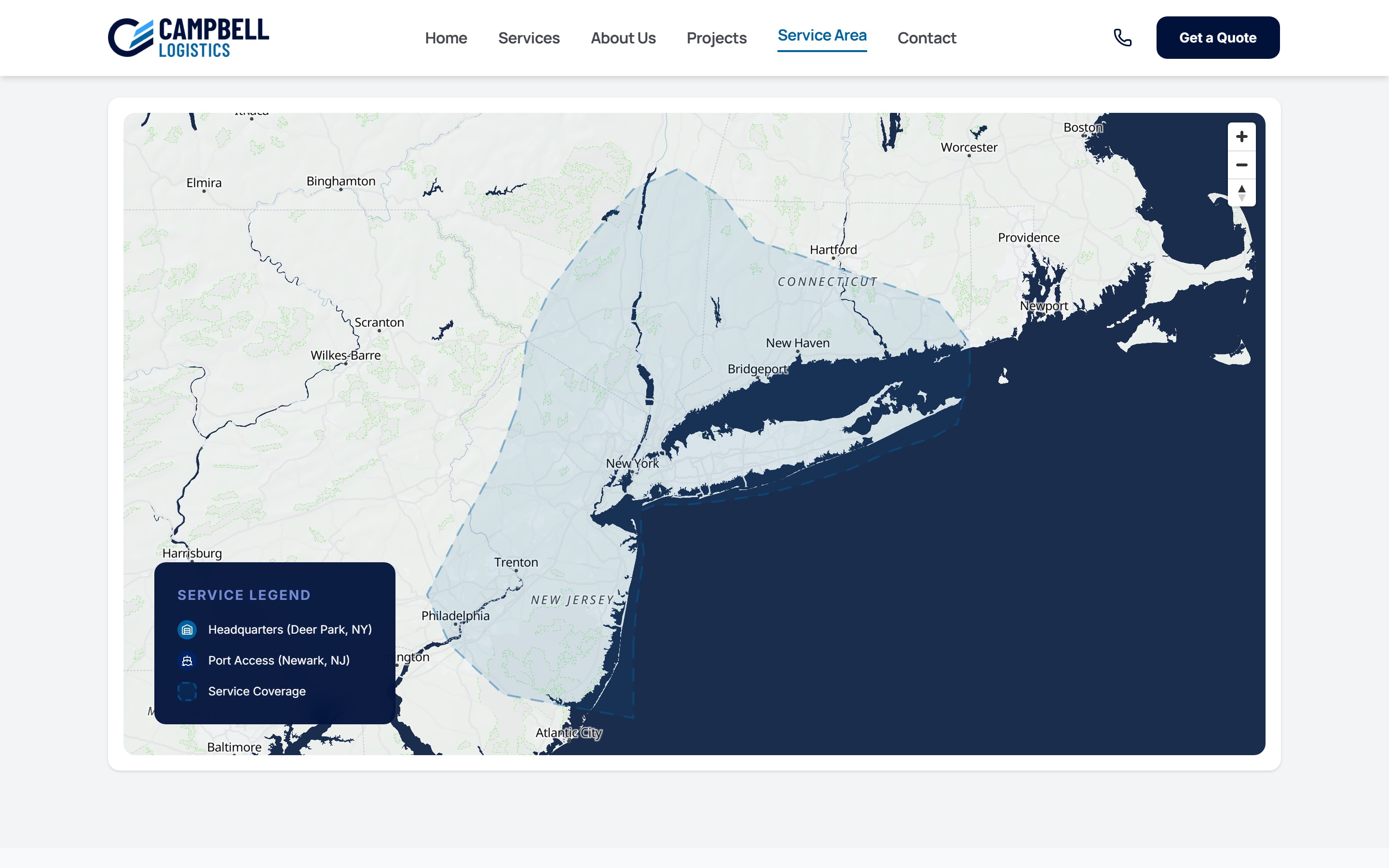
We used MapLibre to render an interactive service area map, a visual answer to the first question every procurement team asks. Stack: Next.js for the shell, Tailwind for the visual system, and a tight component set that could be updated without a full rebuild.
The visual language was chosen to signal reliability over flash: structured typography, controlled color, and a layout that communicates operational confidence. This is a service business for other service businesses. A website for owner-operated freight is a statement about how the company operates.

·03 / Outcome
Outcome.
The site launched in time for Campbell Logistics's first outreach to prospective clients. Procurement teams who visit have the information they need without having to call first: service area, capacity signals, and a direct contact path that doesn't dead-end in a generic form.
For a business in its first year, that's what a website is supposed to do: show up credibly before the relationship starts.